Vertical Roof Carports
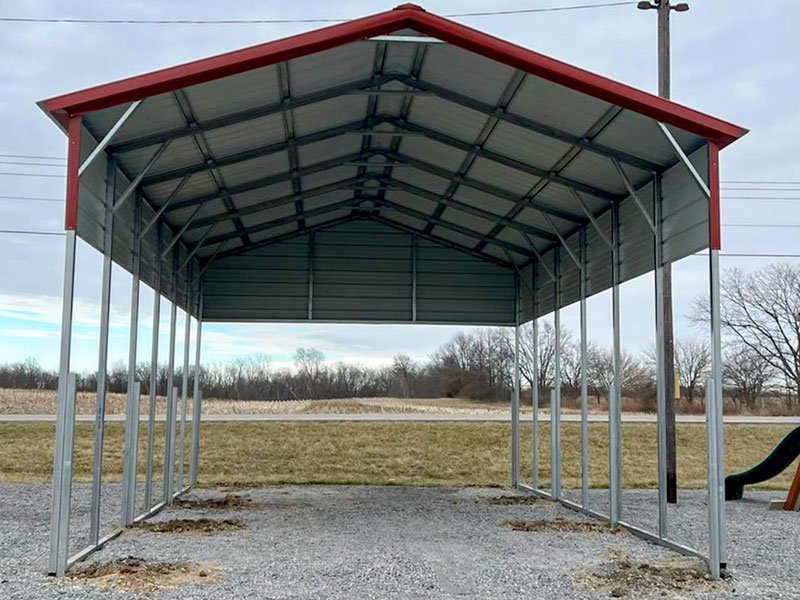
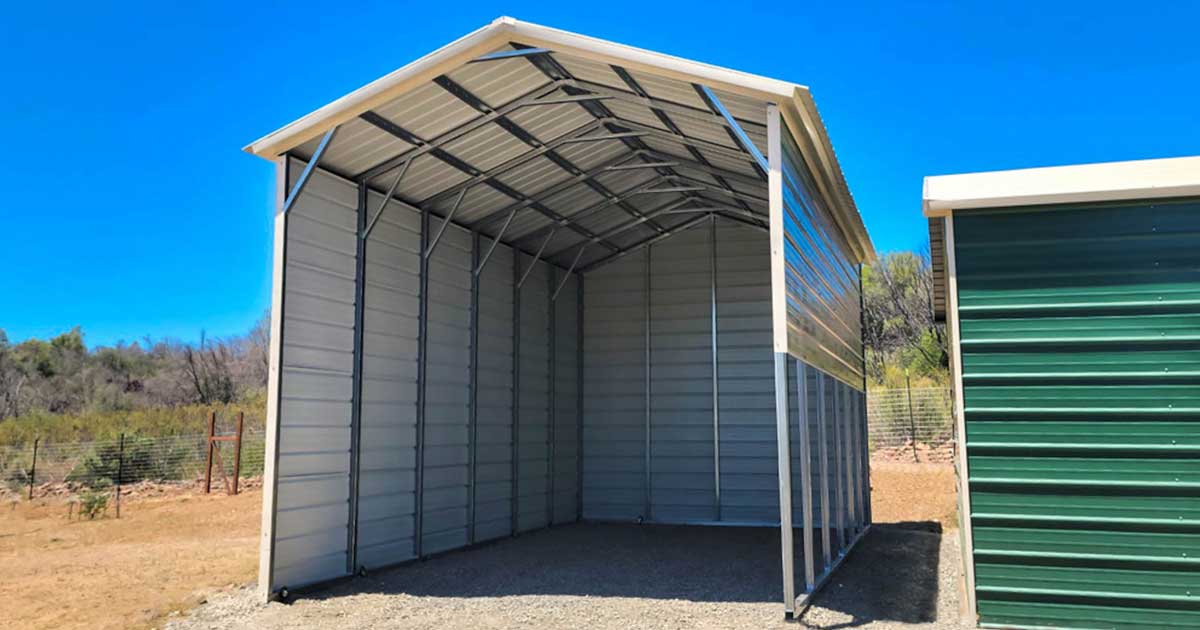
Vertical roof panels run from ridge to eave to improve runoff, reduce debris buildup, and support larger carport and garage configurations.
Ridge-To-Eave Panel Layout
Vertical roof carports use boxed-eave framing with panels installed from the ridge down toward the eaves. This orientation gives water, leaves, and light snow a shorter path off the roof.
The ridge cap allows the vertical roof panels to terminate properly at the roof peak while directing water flow downward toward the eaves, preventing debris accumulation and standing moisture.
When it Matters Most
This orientation is preferred in Northern California regions exposed to heavy rain, tree debris, foothill snow, and mountain weather.
Efficient Runoff
Moves rainwater more efficiently than horizontal systems, drastically reducing standing moisture Risks.
Debris Protection
Vertically oriented panels allow leaves, needles, and debris to wash off rather than accumulating in panel ridges.
Snow Management
Essential for foothill and mountain regions. Vertical panels shed snow quickly to prevent excessive roof weight load.
Standard Versatility
Vertical roof carports are the top choice for larger structures and high-exposure environments across multiple industries.
RV & Motorhome
Commonly preferred for taller structures where larger roof surfaces benefit from improved structural efficiency.
Agricultural Use
Keep tractors and equipment dry while maintaining airflow in exposed field or yard locations.
Commercial & Fleet
Larger spans and multi-vehicle fleet parking often mandate the vertical roof configuration for durability.
Boat & Marine
Reduces long-term moisture exposure on larger covered areas designed for boat and trailer parking.
Residential Car
A practical roof layout for tree-heavy areas where leaves and debris collect on flatter or horizontal-panel roofs.
Industrial Storage
Engineered to handle high-exposure conditions and larger roof surfaces effectively over decades.
Truss Design
Enhanced structural center trusses for maximum clear-span stability.
Bracing Systems
Reinforced peak and leg bracing for high-wind and snow regions.
Frame Gauge
Choice of 12GA or 14GA industrial steel framing systems.
Leg Spacing
Standard 5' on-center spacing or tighter for severe snow loads.
Engineering for
Extreme Exposure
Northern California includes multiple climate zones that can significantly affect structural requirements. A structure appropriate for the valley floor may require different engineering in the foothills.
Foundation &
Anchoring
Vertical roof carports may be installed on concrete slabs, asphalt, gravel, or ground. Larger structures or high-exposure regions often require upgraded anchoring systems.
- Concrete Expansion Bolts
- Asphalt Anchors
- Ground Mobile Home Augers
- Engineered Footing Systems
Engineered Plans
& Permitting
Permit and engineering requirements vary heavily throughout Northern California. Some vertical structures require certified engineered plans by law.
- Structural Calculations
- Wind Load Verification
- Snow Load Analysis
- Foundation Specs
The Vertical Benchmark
The correct structure starts with understanding the property conditions, intended use, and weather exposure it needs to handle long term.
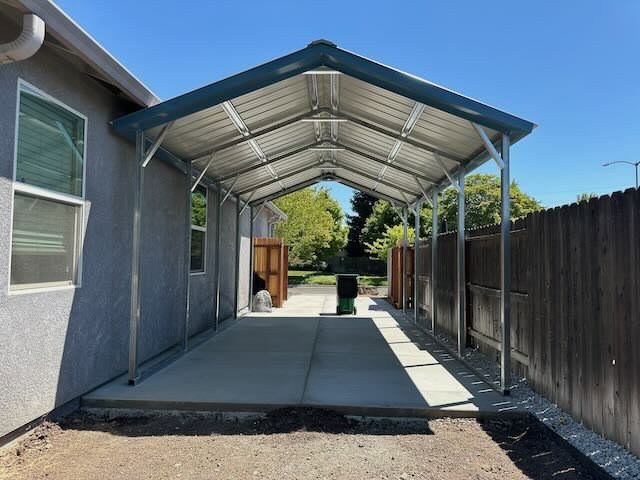
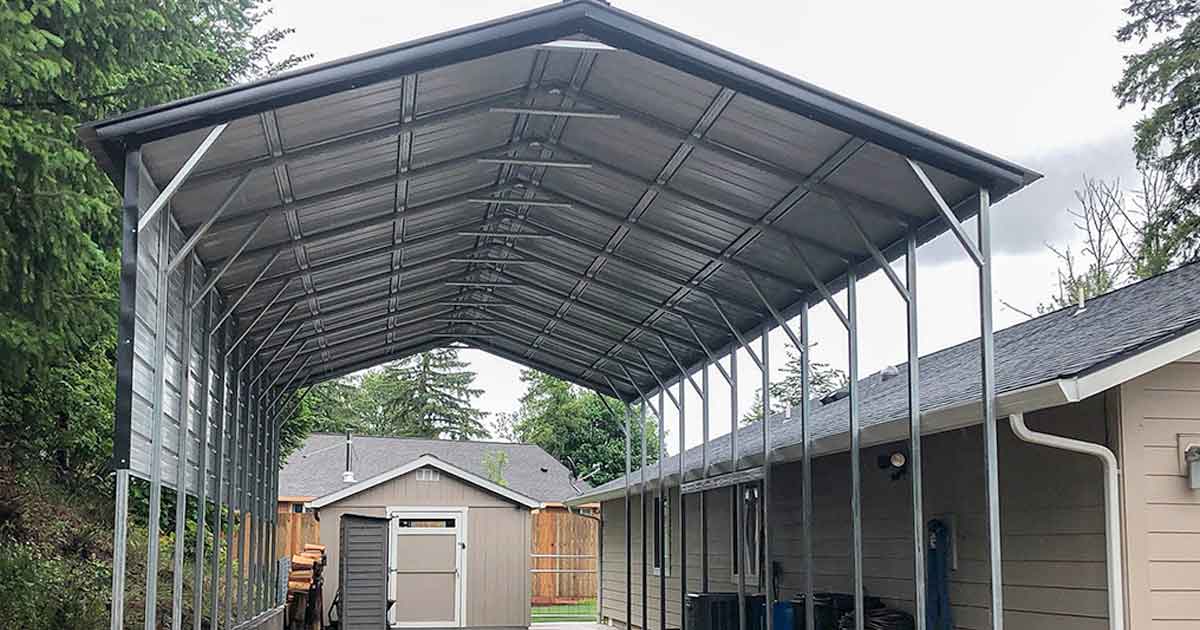
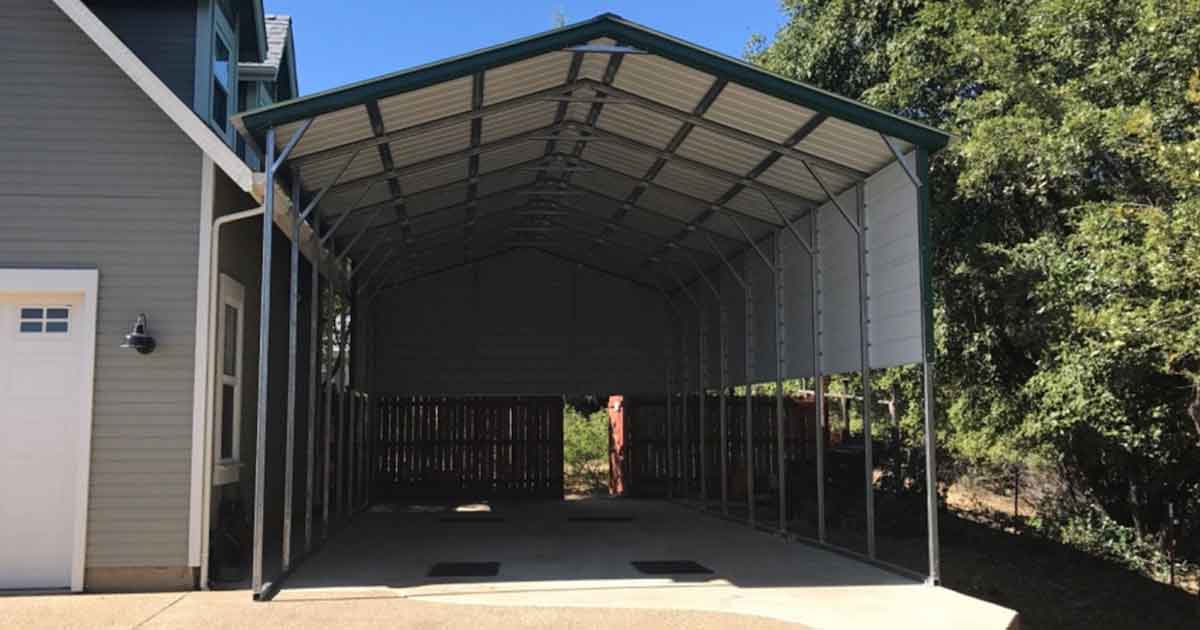
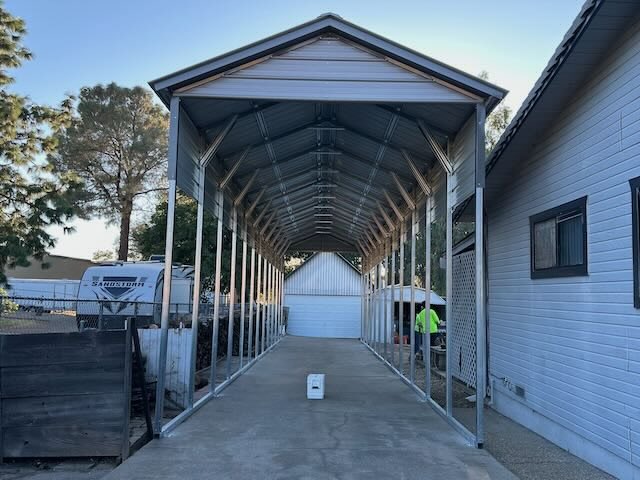
Vertical Roof Carport Gallery
Explore our custom vertical roof metal carport and RV cover installations.
Request A Metal Building
Quote
Need pricing for a carport, RV cover, garage, lean-to addition, or wide span steel structure? Contact Norcal Carports to discuss structure sizing, roof style selection, engineering options, snow load upgrades, and site conditions.